
Wild Prey Made Up More Than 85% of Sri Lankan Leopard Diet, With Indian Hare Most Frequent
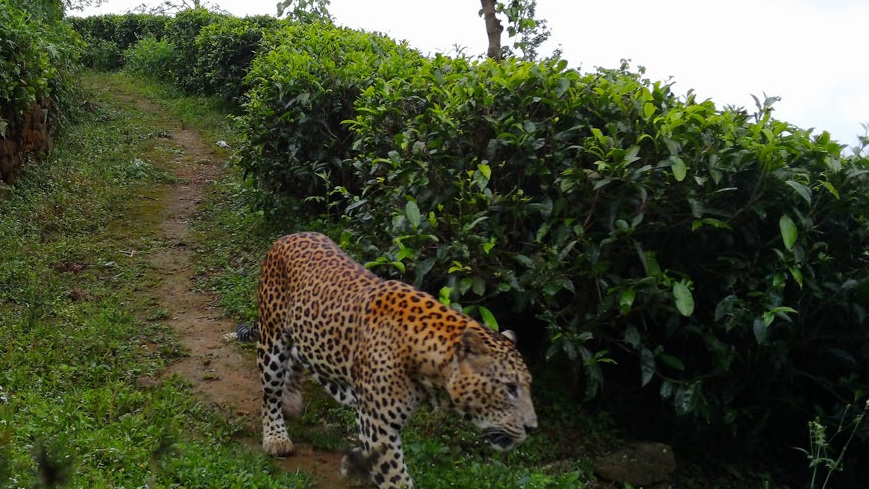
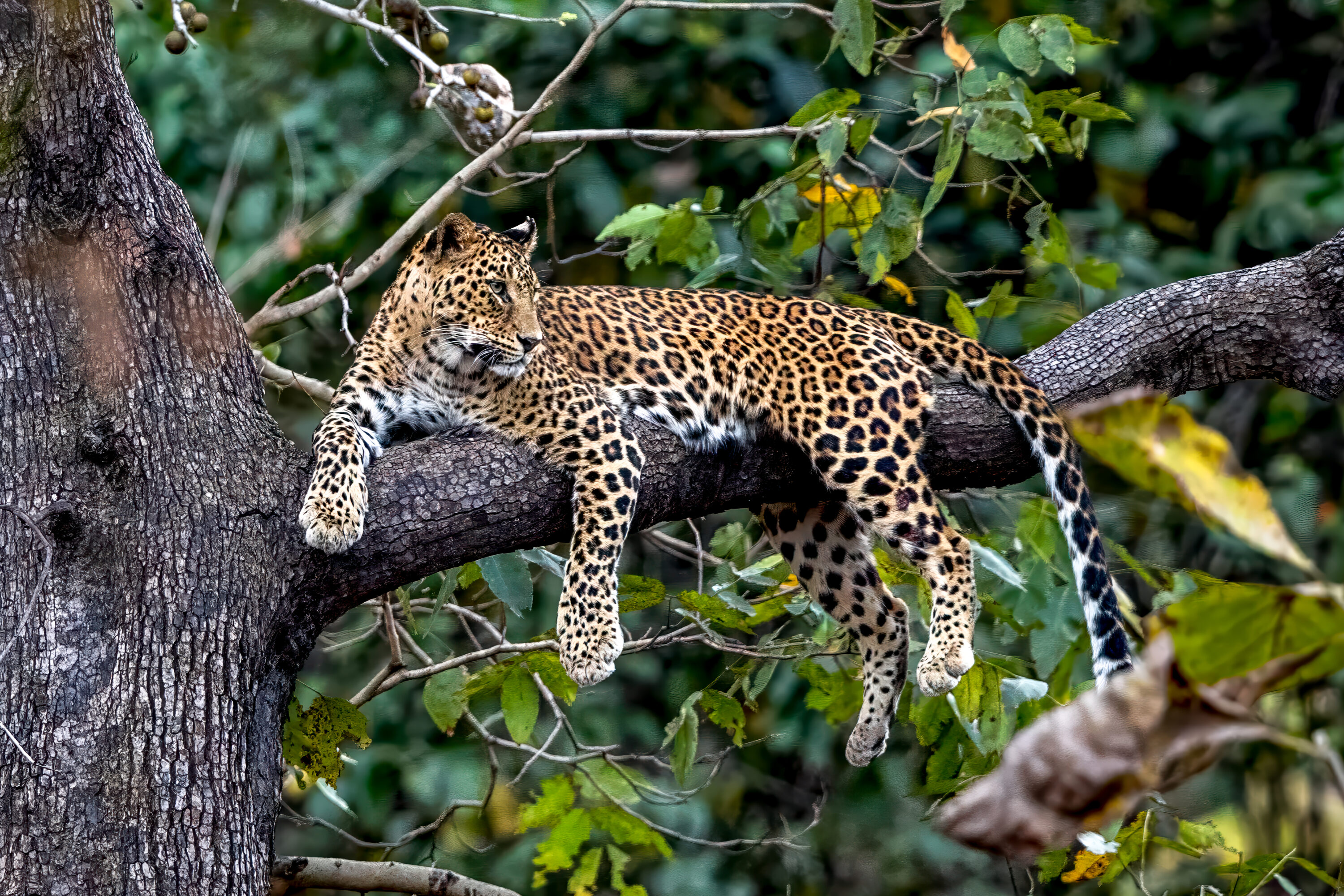
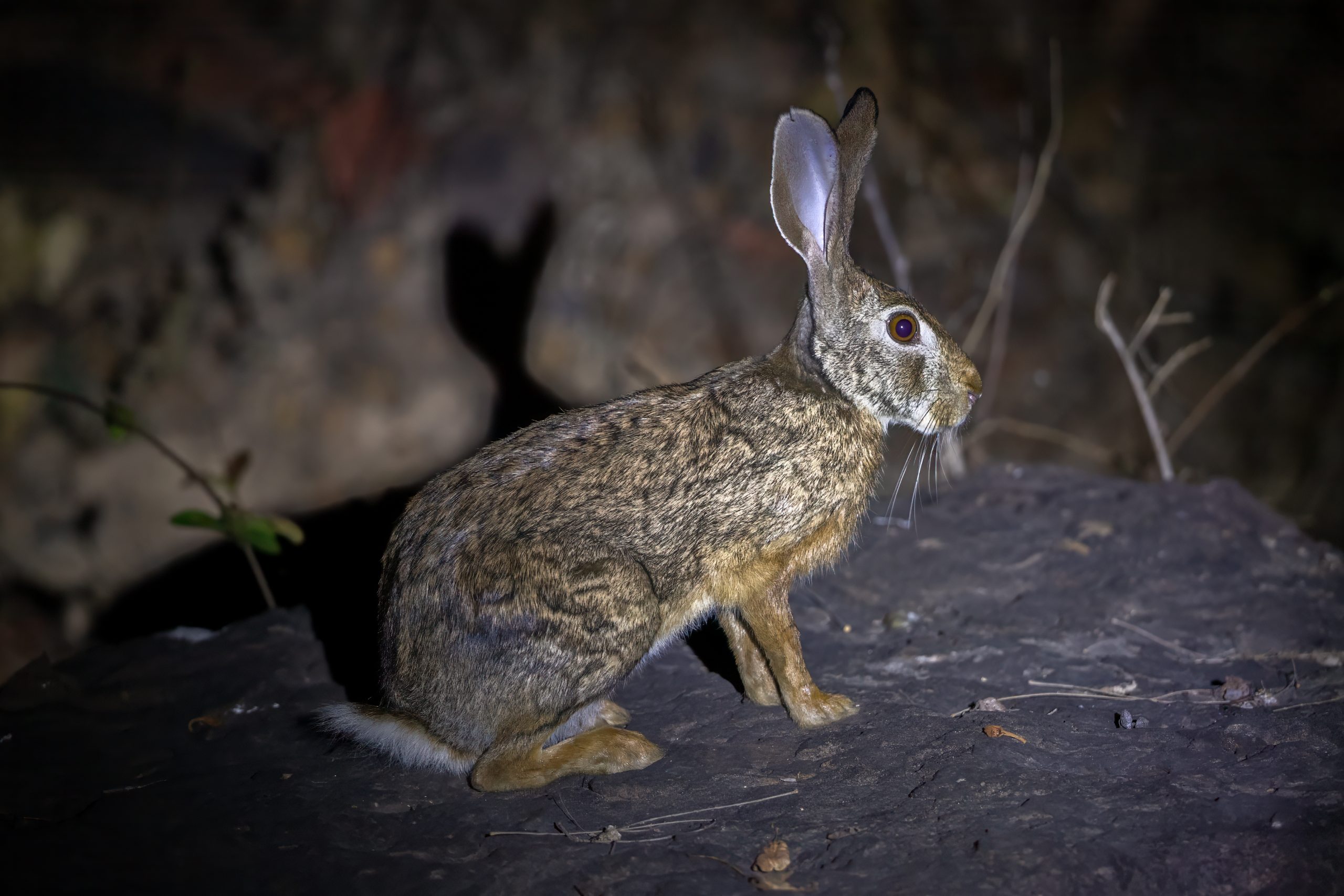
Wild prey made up more than 85% of the diet of Sri Lankan leopards (Panthera pardus kotiya) in the tea-estate landscape of Sri Lanka’s Central Highlands. Indian hare (Lepus nigricollis) was the prey most frequently identified in scat, occurring in 19.8% of samples in which prey could be identified, and was also the most frequently recorded potential prey in the study’s ground-level camera survey.
Researchers analysed 107 leopard scat samples from the Upper Kelani River Basin, including material collected between 2017 and 2023 and an earlier set from the same landscape. Prey could be identified in 101 scats, revealing at least 17 prey species. Camera-trap data from 56 locations were used to estimate relative availability for medium-to-large terrestrial prey.
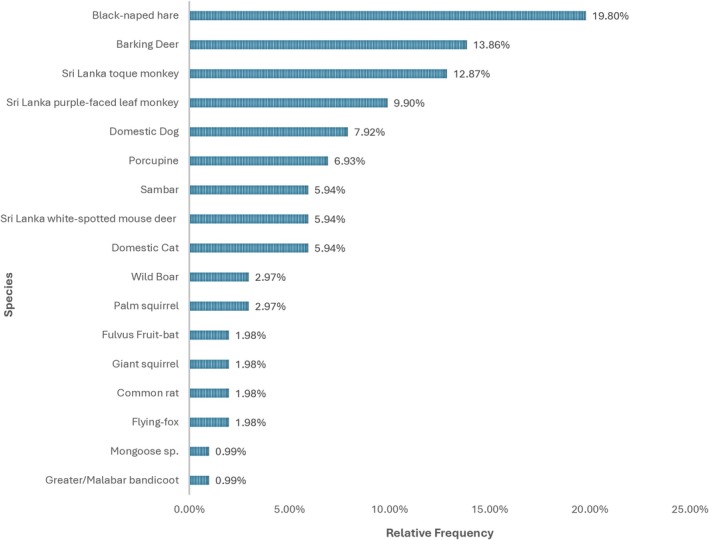
Indian hare was most frequent, but barking deer contributed most biomass
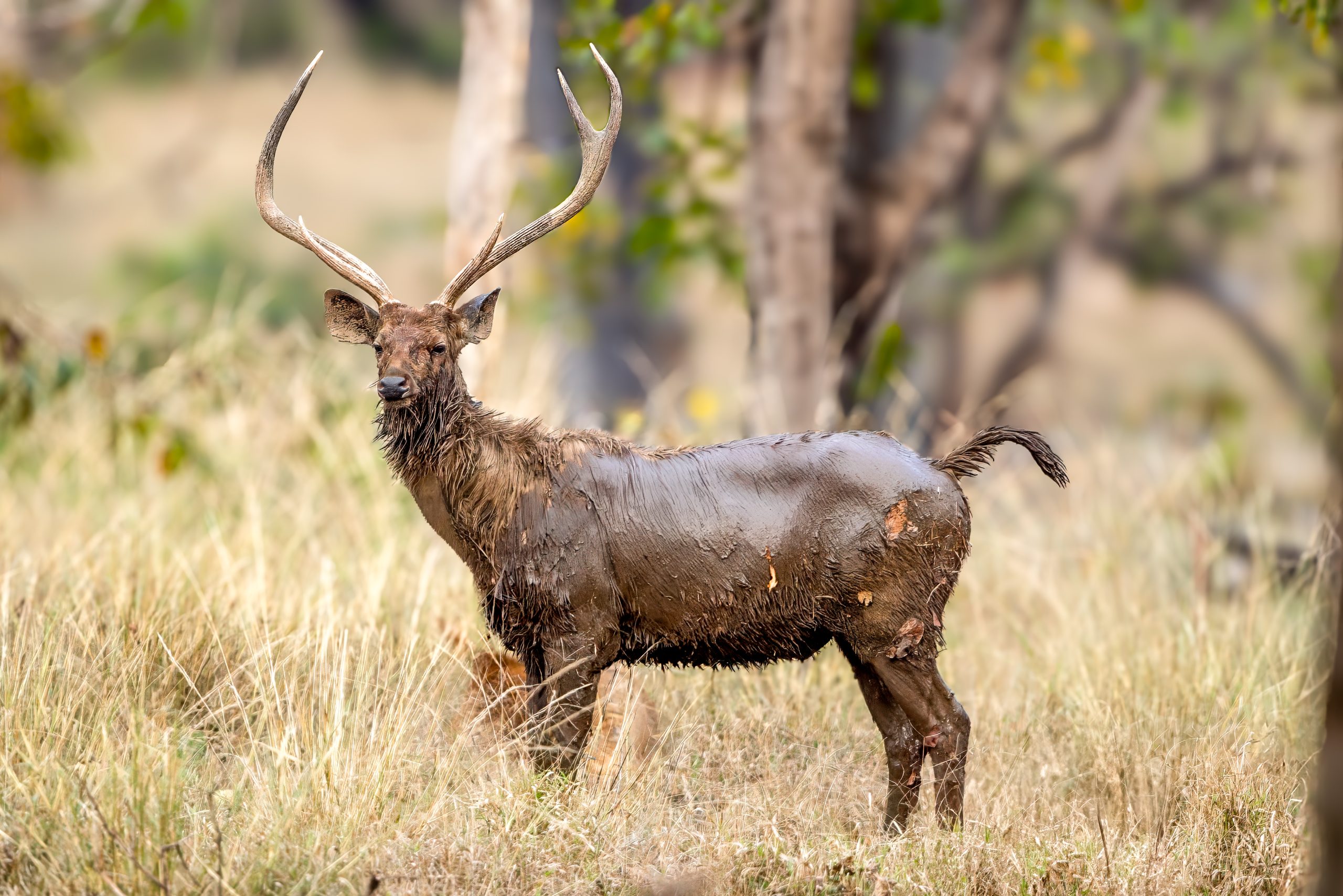
The high frequency of Indian hare largely reflected its high availability in the landscape rather than strong positive selection. Barking deer (Muntiacus malabaricus) occurred in 13.9% of identifiable scats but contributed more than 20% of estimated consumed biomass and appeared in the diet more often than its camera-trap availability would suggest. Sambar (Rusa unicolor) occurred less frequently but was also taken more often than its camera-trap availability would suggest and contributed substantially more biomass than its occurrence alone would indicate.
Primates were another major component. Sri Lanka toque monkey (Macaca sinica) and Sri Lanka purple-faced leaf monkey (Semnopithecus vetulus) together accounted for about 23% of both prey occurrence and consumed biomass. Because the camera traps were positioned for terrestrial animals, the study could not estimate the availability of these arboreal primates and therefore could not test whether leopards selected them disproportionately.
Domestic prey remained a minority
Domestic species together made up less than 15% of identifiable prey records. Dogs were common in the landscape but were moderately avoided relative to their estimated availability. Domestic cats were rare in the camera data but occurred in the diet more often than that low availability would suggest; they still made up only a small part of consumed prey. Goats and cattle were not detected in the analysed diet. The authors therefore describe the leopards as generalist and opportunistic predators that still rely predominantly on a diverse wild prey base in this heavily modified tea-growing landscape.
Ecology
Related news
Nine Indian species could anchor protection for biodiversity and carbon
A national analysis identifies nine threatened Indian vertebrates whose habitat could act as an anchor for protecting hundreds…
Read story →
DNA Metabarcoding Found 15 Vertebrate Prey Species in Tadoba Dhole Scats
DNA metabarcoding of 169 dhole scats in Tadoba detected 15 vertebrate prey species. Indian hare occurred in 30.8%…
Read story →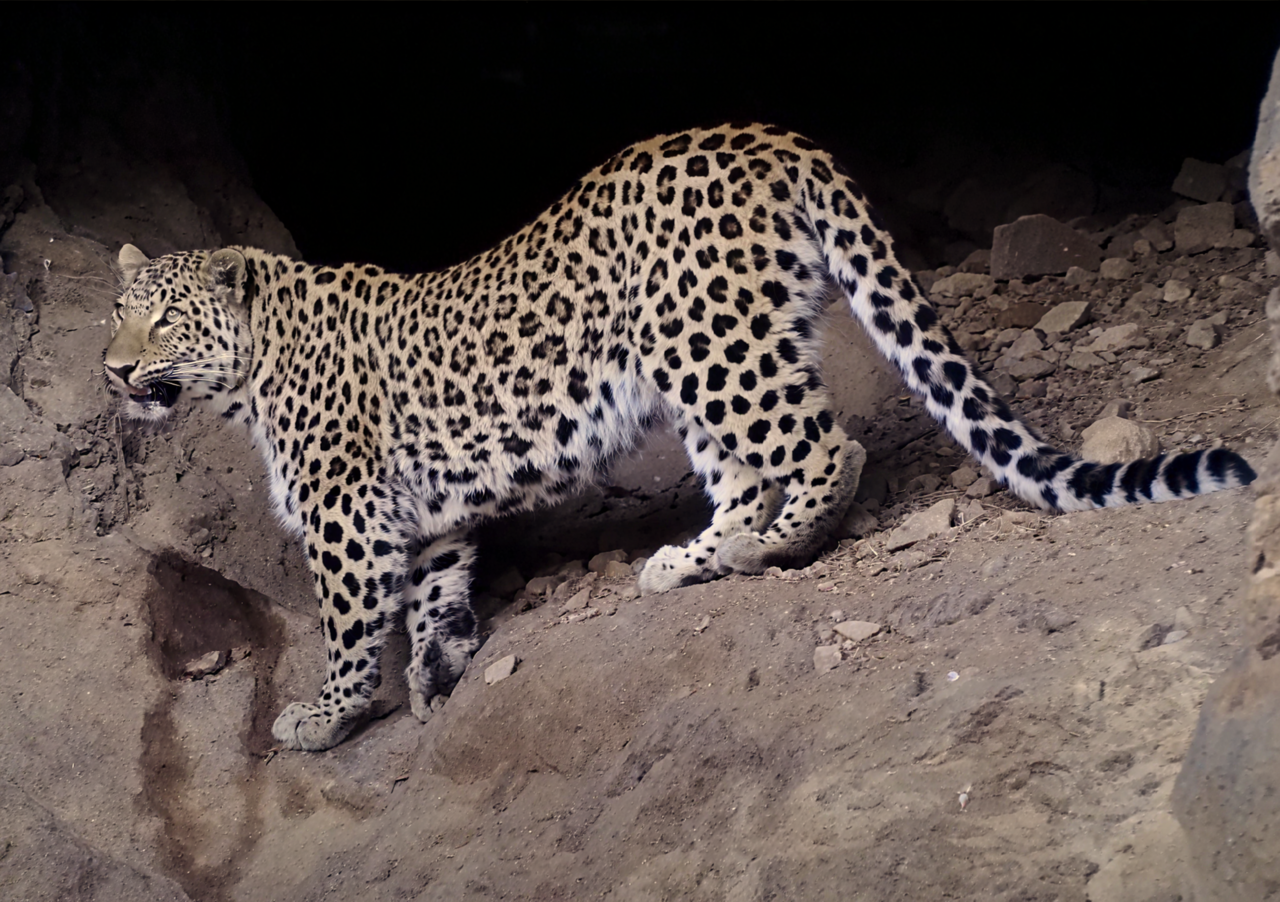
Living With Carnivores Is About More Than Livestock Losses
Near Iran’s Golestan National Park, researchers explored what was associated with people’s willingness to accept leopards, wolves and…
Read story →SPECIES IN THIS STORY
Species in this story
Independent research and conservation news archive
Did you find this information useful?
Wildlife Vagabond is independently built and maintained. Voluntary support helps cover source verification, hosting and continued work on research and conservation news.
Support Wildlife VagabondThe news archive will remain freely available.