
Mallard Population Growth Was Lower in Years With Longer Growing Seasons at Higher Latitudes
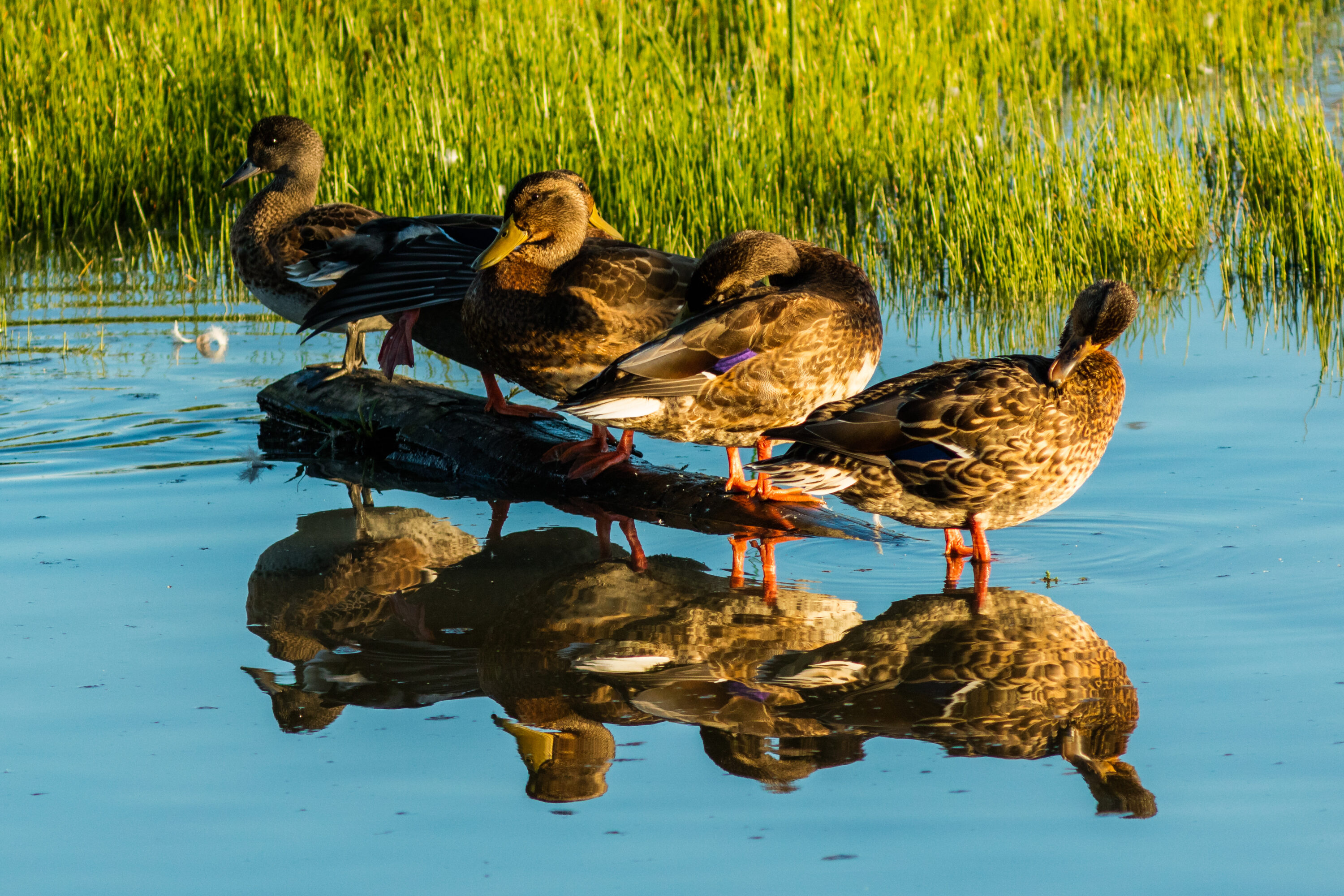
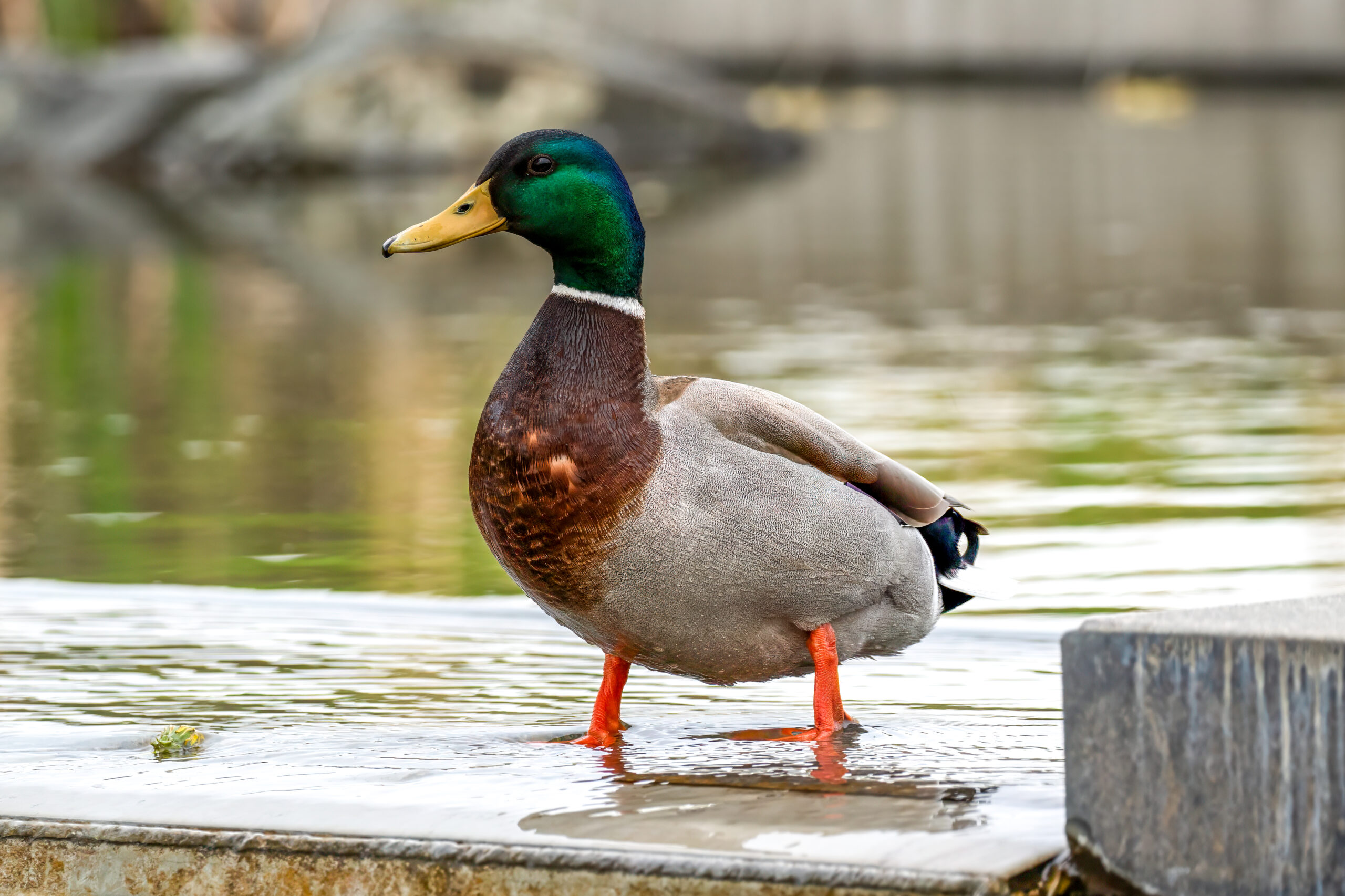
Across 38 years of breeding-duck surveys in the western boreal forest of North America, annual mallard (Anas platyrhynchos) population growth was lower in years with longer growing seasons at higher latitudes. At the lower latitudes in the study area, the relationship was close to neutral. This was the opposite of the researchers’ prediction that a longer season would generally benefit breeding ducks.
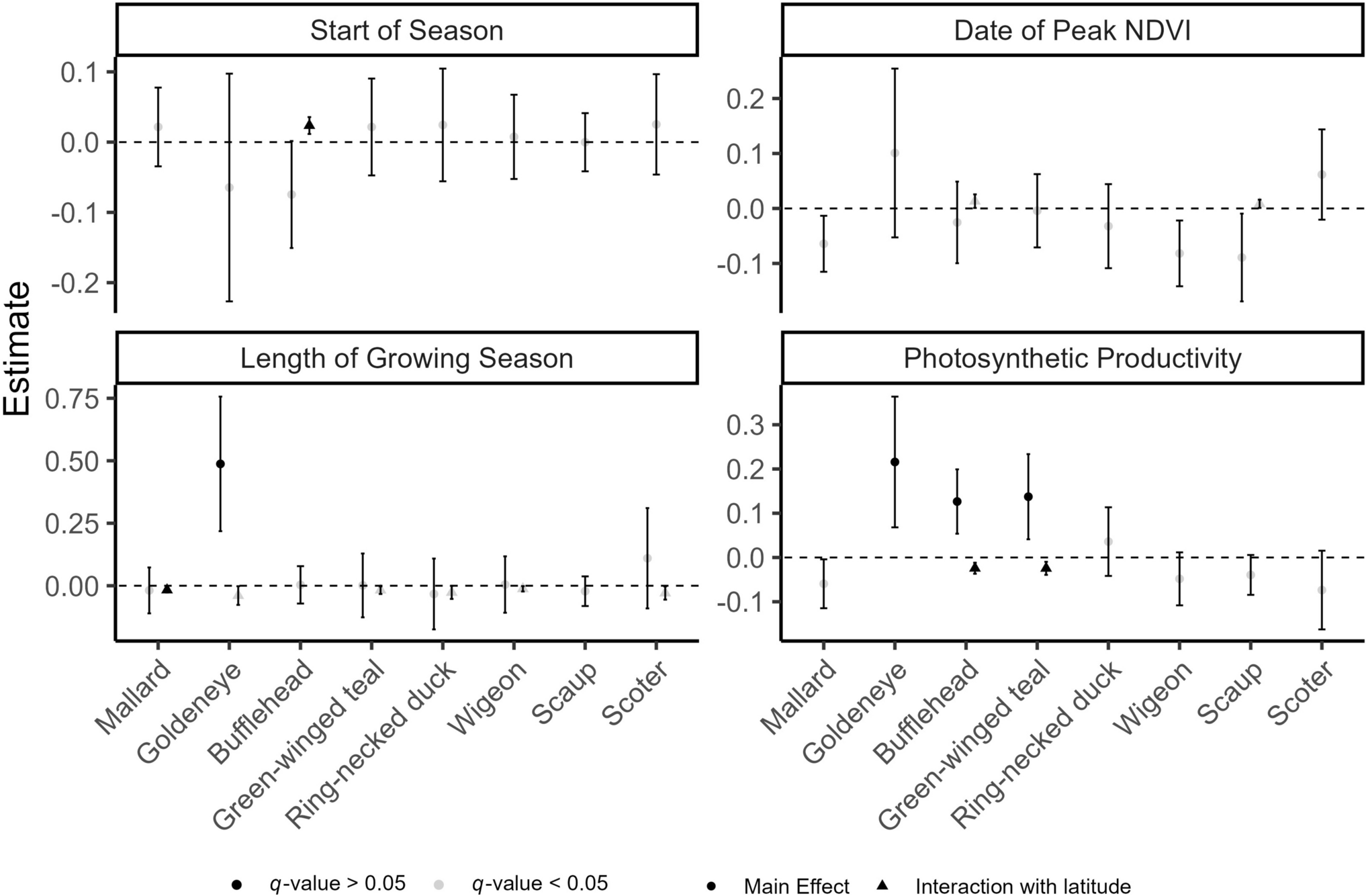
The study used breeding-population estimates from 1982 to 2019 for eight duck species or species groups. Satellite vegetation data described four aspects of each year’s growing season: when spring growth began, when vegetation peaked, how long the growing season lasted and how much vegetation was produced.
Duck species responded differently to longer and more productive seasons
For mallards, neither the timing of spring nor peak vegetation showed a clear relationship with annual population growth, and cumulative vegetation productivity also had no detectable effect. Growing-season length was different: the relationship became increasingly negative toward higher latitudes.
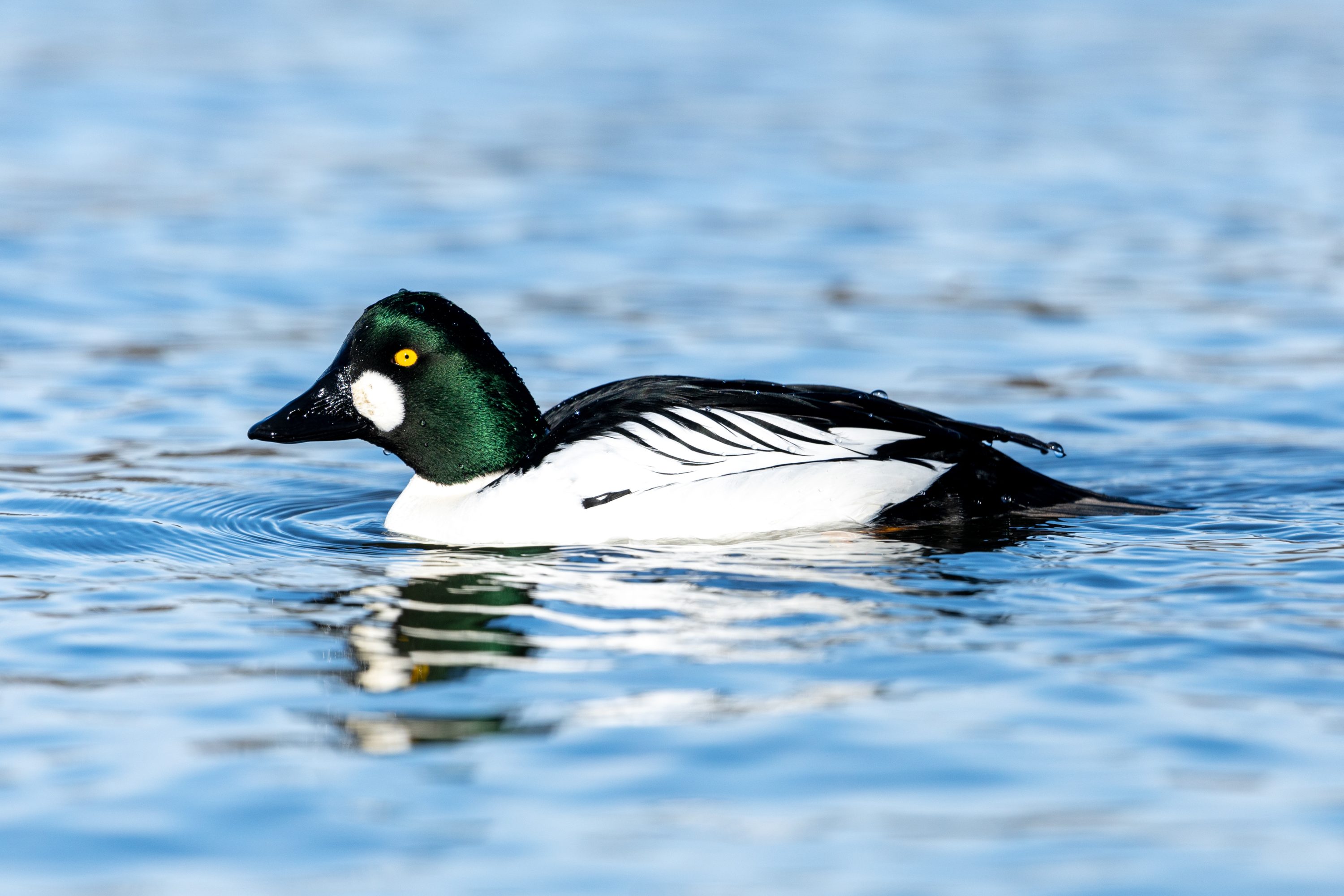
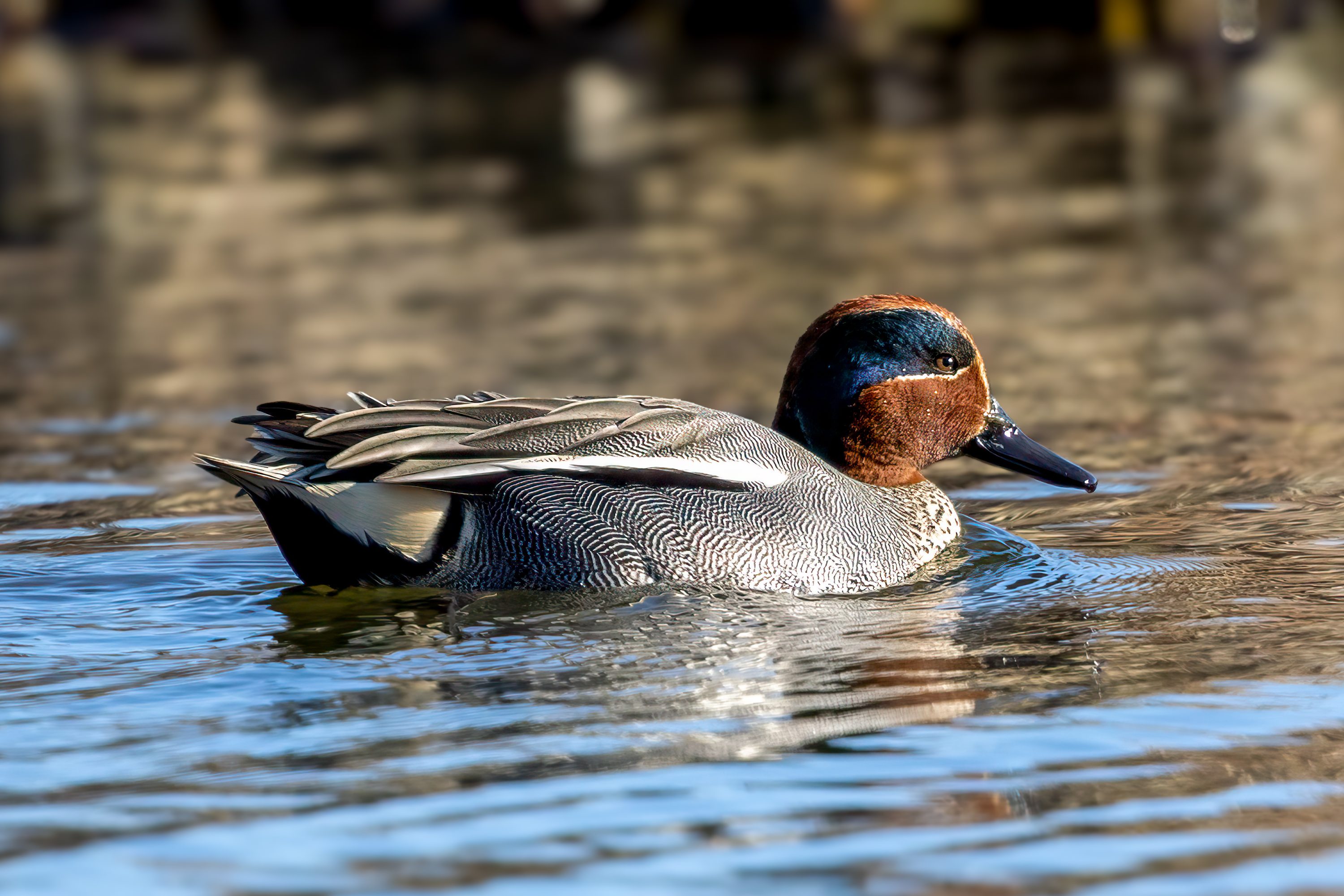
The combined goldeneye group — common goldeneye (Bucephala clangula) and Barrow’s goldeneye (B. islandica) — showed the opposite response to growing-season length, with higher population growth in years with longer seasons at lower latitudes and a weaker effect farther north. Higher vegetation productivity was also linked to higher population growth in goldeneyes and, at lower latitudes, in buffleheads (B. albeola) and green-winged teal (Anas crecca).
Why longer seasons may not help mallards
The researchers had expected longer seasons to provide more time for renesting and raising young. They discuss several reasons why that extra time might not translate into faster population growth. A later nesting attempt may still leave too little time for ducklings to fledge and begin migration in good condition, while repeated nesting can expose females to additional nesting mortality and reduce body condition before autumn migration.
These mechanisms were not tested directly in the study. The authors conclude more broadly that simple measures such as growing-season length or total vegetation productivity do not affect all boreal ducks in the same way; more complex biotic and abiotic interactions can modify or outweigh the expected benefits of a longer growing season.
Ecology
Related news
Seven overlaps linked wild-bird H5 clusters with poultry outbreaks in the US
Across seven periods between 2022 and 2025, clusters of H5 detections in wild waterfowl overlapped in time and…
Read story →
Nine PFAS Compounds Were Detected in Most Finnish Common Goldeneye Egg Samples
A 2026 Finnish master’s thesis found nine of 19 targeted PFAS compounds in more than 60% of analysed…
Read story →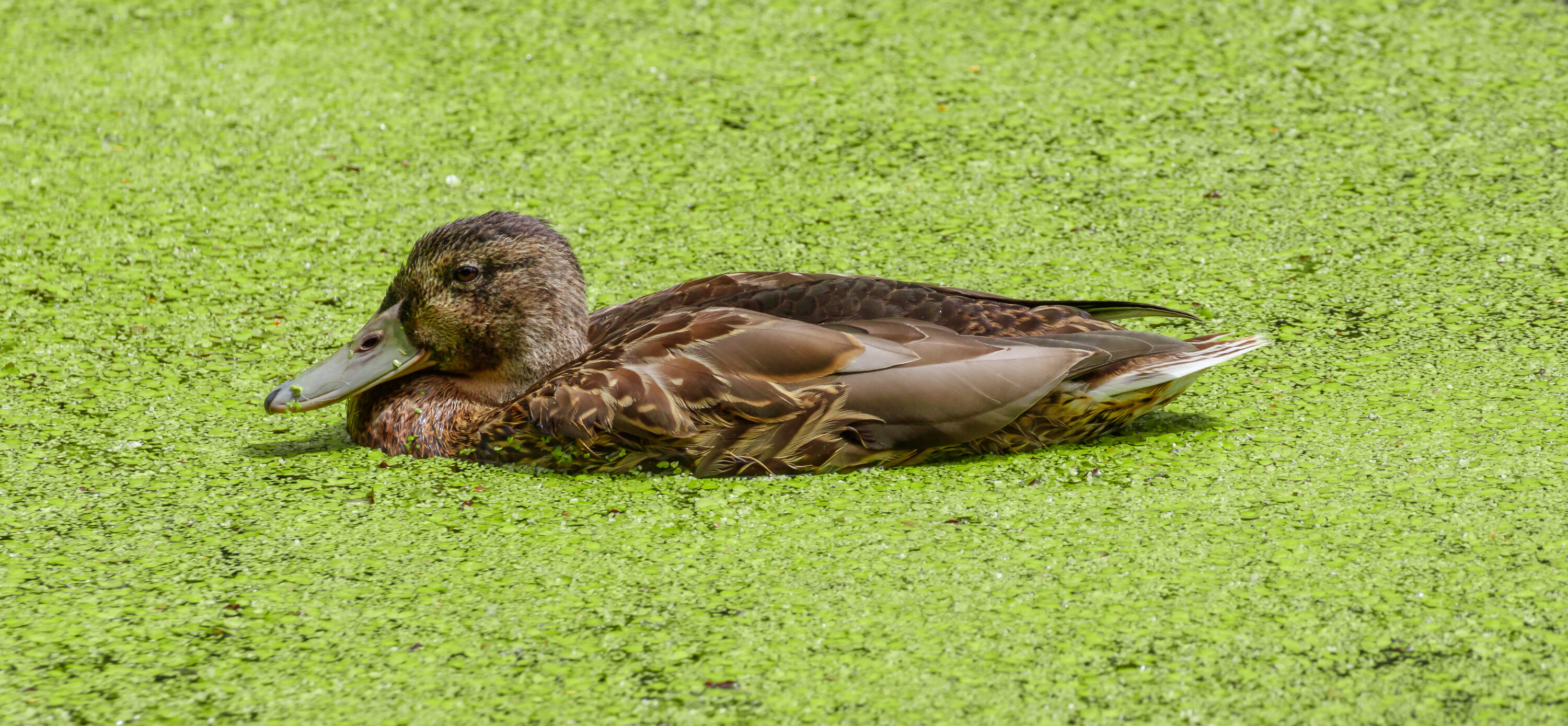
H5 Avian Influenza RNA and ESBL E. coli Detected in Water Bins Used by Wild Mallards in Germany
Water from baited bins visited mainly by wild mallards on Germany’s Baltic coast contained RNA from highly pathogenic…
Read story →SPECIES IN THIS STORY
Species in this story
Independent research and conservation news archive
Did you find this information useful?
Wildlife Vagabond is independently built and maintained. Voluntary support helps cover source verification, hosting and continued work on research and conservation news.
Support Wildlife VagabondThe news archive will remain freely available.