
Sambar and Wild Pigs Were Too Infrequently Detected for Density Estimates in a Sumatran Tiger Landscape
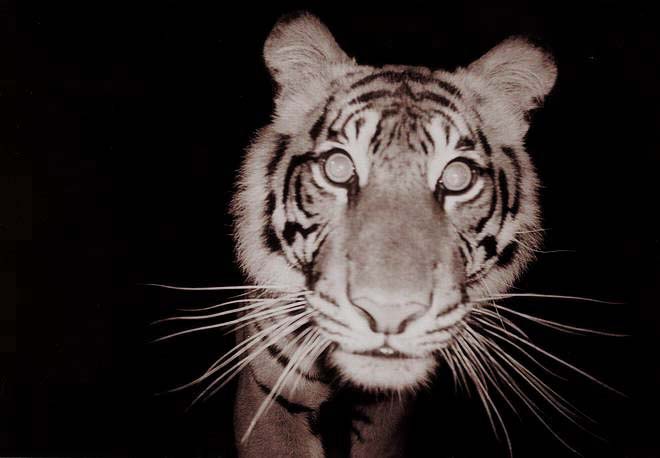
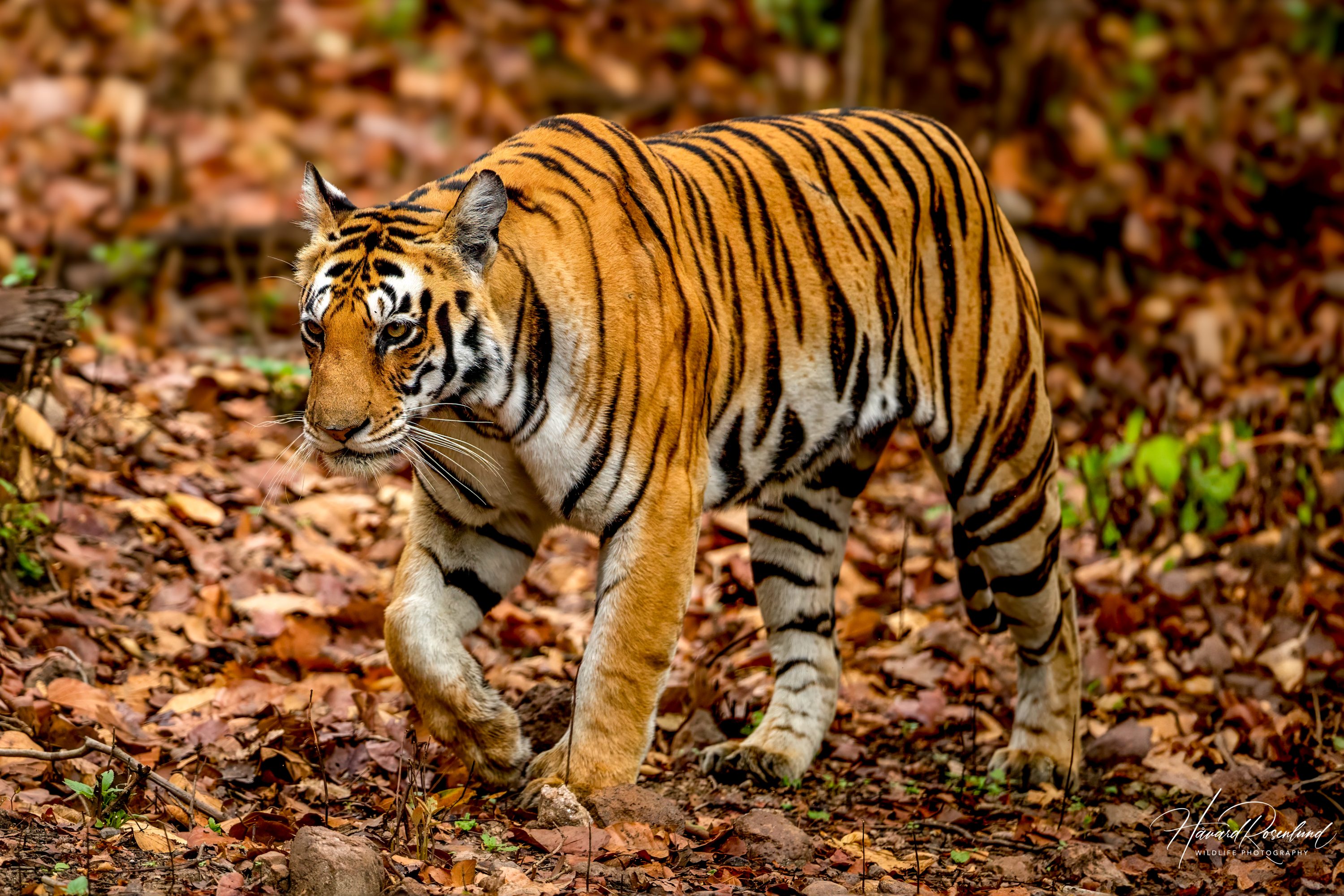
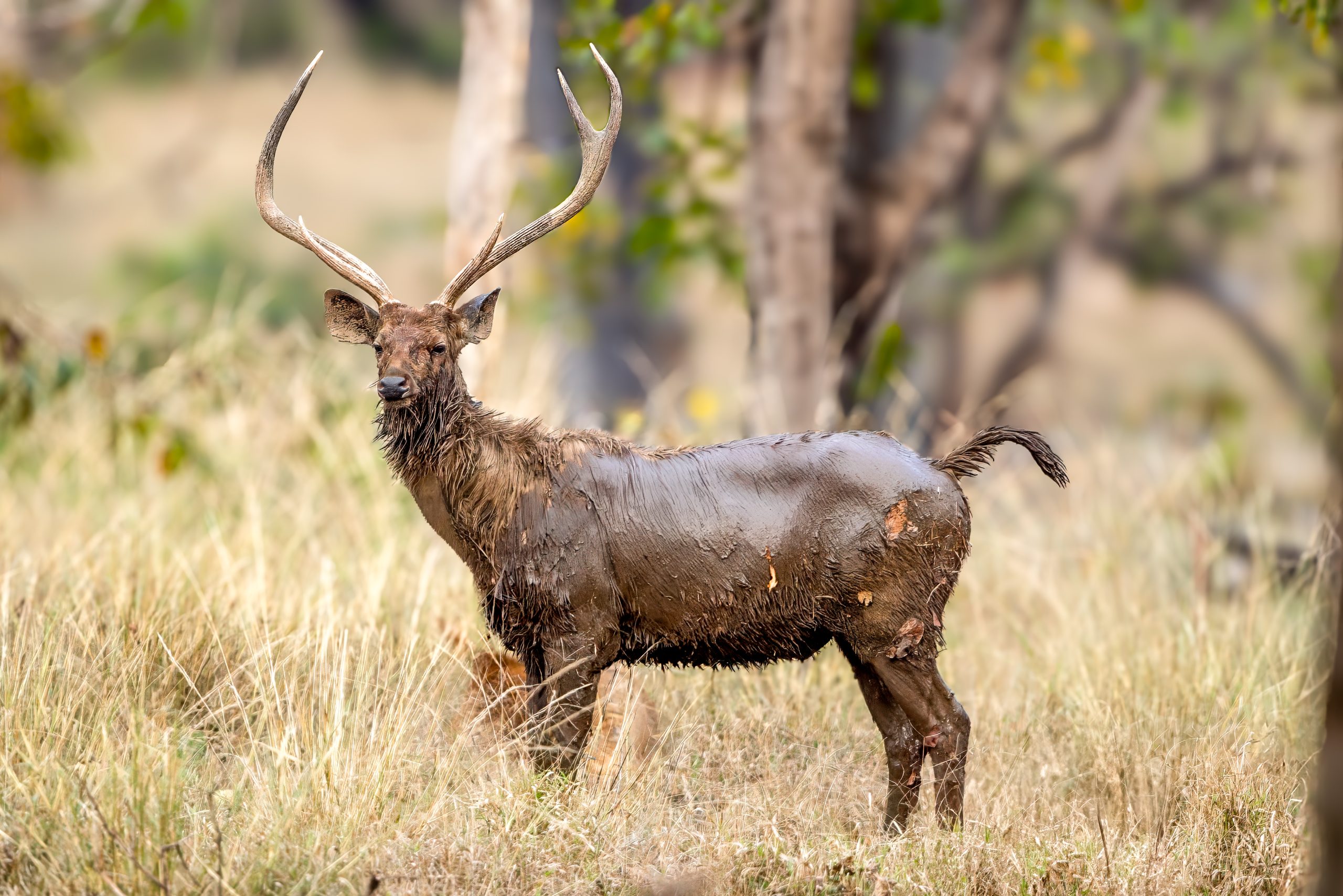
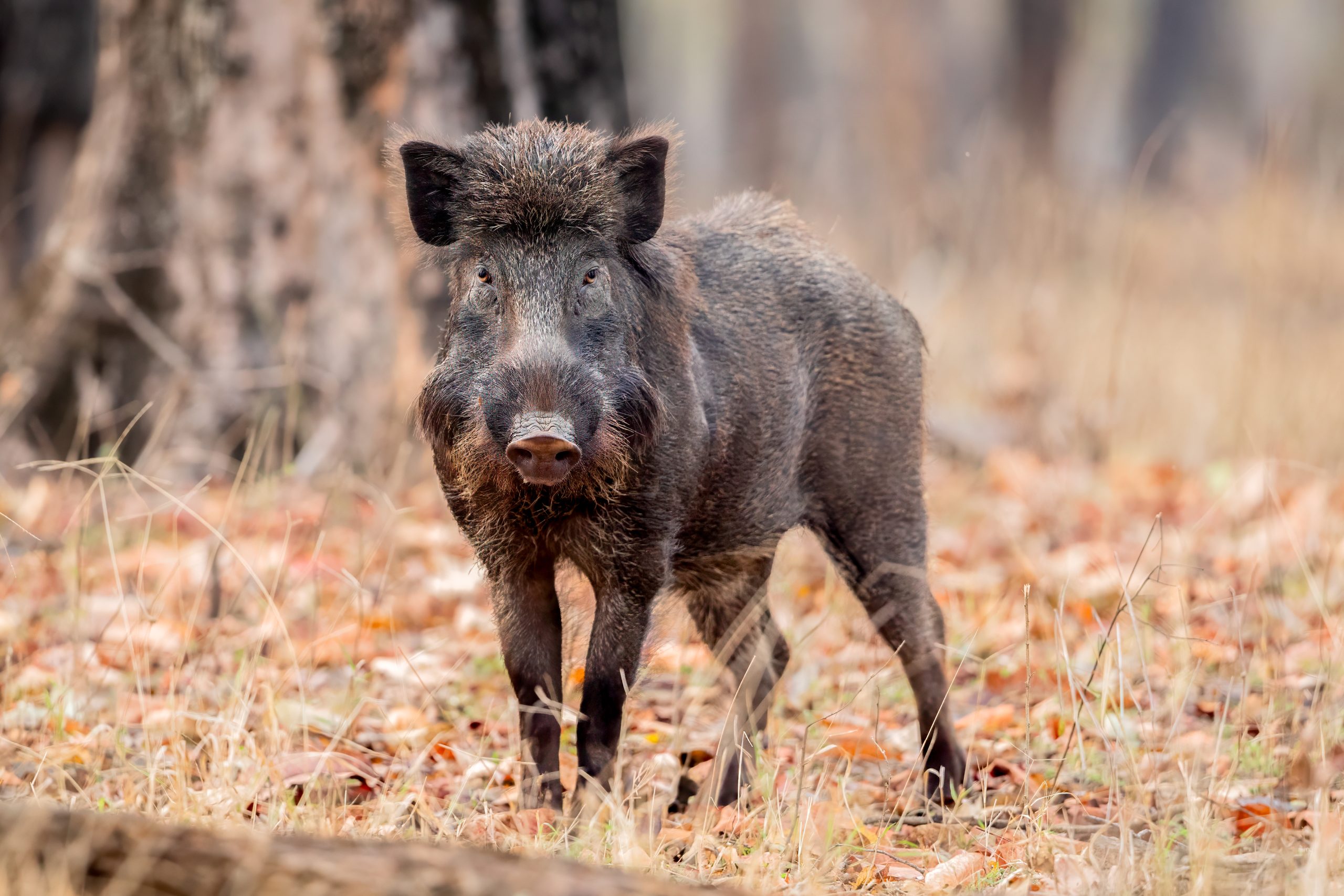
A camera-trap study in a forest-restoration concession in central Sumatra found a limited prey base for the Sumatran tiger (Panthera tigris sumatrae). Sambar and wild pigs — among the larger prey the authors consider especially important for tiger recovery — were recorded too infrequently for their densities to be estimated.
The work took place in a 221 km² block of the PT Alam Bukit Tigapuluh ecosystem-restoration concession bordering Bukit Tigapuluh National Park. The researchers tested whether randomly placed camera traps could provide less biased density estimates for unmarked prey in dense rainforest, where direct counts are difficult.
Random cameras allowed density to be estimated from detection distance
Camera-trap distance sampling requires cameras to be placed independently of animal trails and other features that would deliberately increase detections. Sixteen cameras were therefore positioned close to randomly selected grid centres rather than along the roads, ridges and animal paths typically chosen for tiger surveys.
For each usable detection, researchers measured how far the animal was from the camera. Because animals farther from a camera are less likely to be detected, the way detections decline with distance can be modelled and combined with the animals’ activity level and the amount of camera sampling to estimate how many animals occur per square kilometre.
Enough data were available for two species. Southern red muntjac (Muntiacus muntjak) density was estimated at about 2.1 animals per km², while southern pig-tailed macaque (Macaca nemestrina) density was estimated at about 6.4 per km². The authors describe these as the first published quantitative density estimates for these species from tiger landscapes in the Sundaic forests of South-east Asia.
The two estimates were useful but not very precise
The researchers caution that both density estimates had relatively low precision because detections were unevenly distributed among the 16 cameras. About 57% of muntjac encounters came from only three stations, while 72% of macaque encounters came from four. More camera locations and longer sampling would therefore be needed for tighter estimates.
Sambar (Rusa unicolor) and wild boar (Sus scrofa) produced more measured camera distances in total, but only six and 16 pseudo-independent detections respectively. Their records were too clustered for the distance-sampling model, so the study could not calculate reliable density estimates for them. Bearded pig (Sus barbatus) was also too rarely recorded.
Random placement worked better for prey than for large carnivores
The study compared the random array with a conventional tiger-focused camera grid in the same broader landscape. Ungulates and primates were detected at similar or higher rates with the random cameras, suggesting that random placement did not prevent useful prey monitoring under these conditions.
Tigers and Sunda clouded leopards were detected less often by the random array. The authors therefore recommend combining random cameras, which are needed for unbiased prey-density estimation, with targeted cameras placed where large carnivores are most likely to pass. They also caution that the two camera arrays differed somewhat in where and when they operated, so their detection rates were not a perfectly controlled comparison.
Hunting and disease were linked to the sparse large-prey community
The authors describe the overall tiger prey base as limited. Sambar were recorded at very low rates, and wild pigs were infrequent. African swine fever has caused widespread declines of wild pigs across Sumatra since 2020, and bearded pigs that were formerly present at the site have not been recorded there since the outbreak.
Hunting was also directly visible in the camera data. Cameras recorded suspected hunters moving at night with homemade guns, and the authors conclude that shooting pressure is suppressing ungulate populations. Sambar, wild and bearded pigs and muntjacs are all hunted in the region.
The concession still supports a small resident tiger population, but the researchers argue that habitat protection alone is unlikely to be enough for long-term recovery. They recommend reducing hunting pressure and actively rebuilding prey populations, with particular emphasis on sambar and wild pigs.
Ecology
Related news
Human Activity and Large Wildlife Overlapped Most in Chitwan’s Buffer Zone
Camera traps across Chitwan National Park and surrounding forests showed the greatest overlap of human activity with large…
Read story →
Maps Show Where Wild Boar Could Thrive and Spread on Jeju Island
Researchers mapped potentially suitable wild-boar habitat across roughly 36% of Jeju Island and identified eight possible corridors linking…
Read story →
Roe Deer and Wild Boar Remained Key Wolf Prey as Diet Shifted Across North-western Italy
From 2021 to 2025, wolves in north-western Italy continued to feed mainly on wild prey. In the Po…
Read story →SPECIES IN THIS STORY
Species in this story
Independent research and conservation news archive
Did you find this information useful?
Wildlife Vagabond is independently built and maintained. Voluntary support helps cover source verification, hosting and continued work on research and conservation news.
Support Wildlife VagabondThe news archive will remain freely available.