
Great Egret Nesting Pairs Increased 96% While Black-crowned Night Herons Fell 55% in New York–New Jersey Harbor
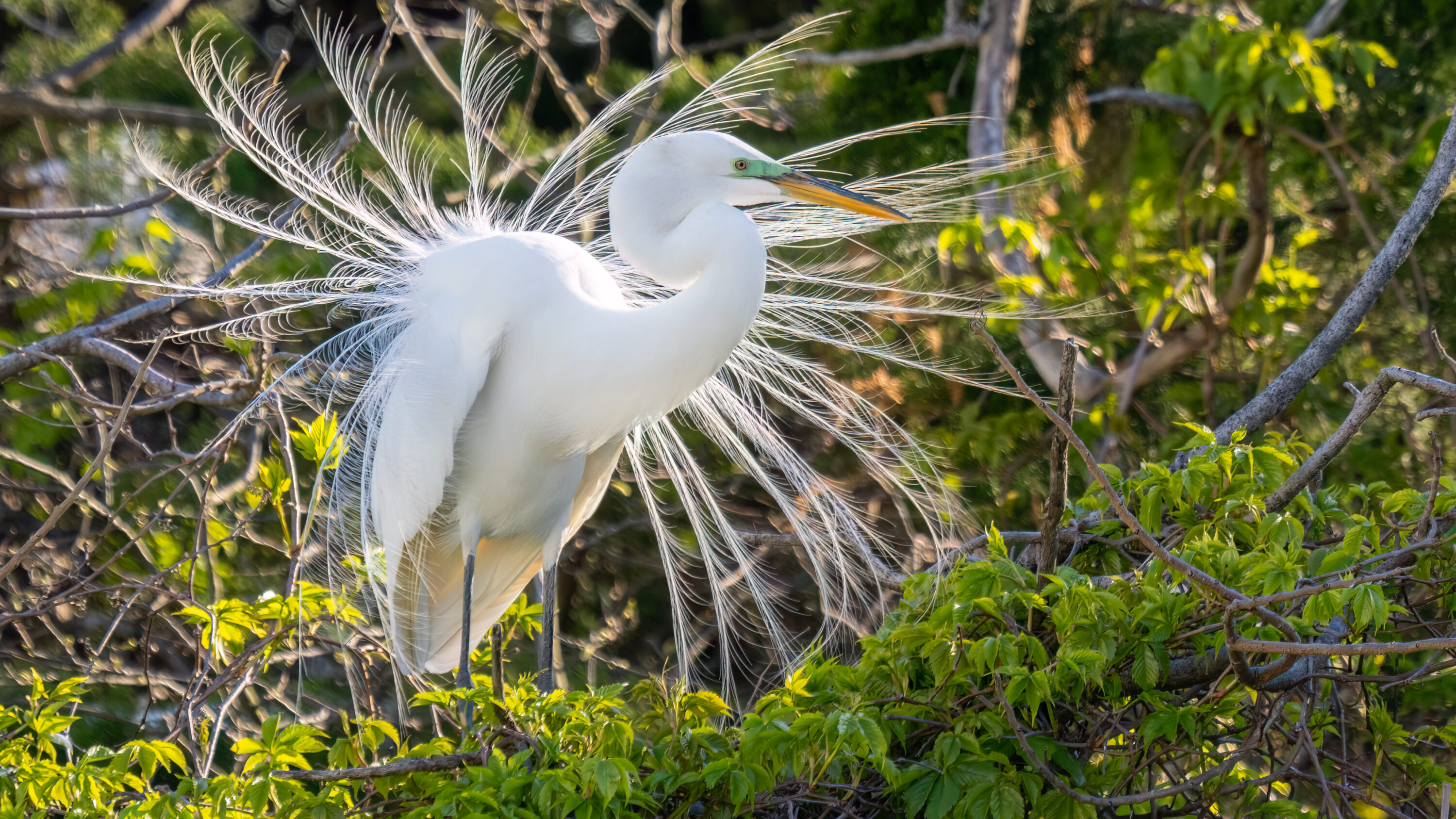
A 22-year census of colonial wading birds in New York, USA–New Jersey Harbor found sharply contrasting trends among its most common species. From 2000 to 2022, the modelled number of nesting pairs of great egret (Ardea alba) increased by 96% and snowy egret (Egretta thula) by 26%, while black-crowned night heron (Nycticorax nycticorax) declined by 55% and glossy ibis (Plegadis falcinellus) by 59%. The study was first published on 3 June 2026 in Conservation Science and Practice.
Researchers used complete nest censuses from all known breeding locations in the harbor. The analysis focused particularly on the four most abundant species, which together accounted for 96% of the observations in the dataset. Years with only partial surveys were excluded from the trend models, and no survey was conducted in 2020 because of COVID-19 restrictions.
Egrets increased as night herons and ibises declined
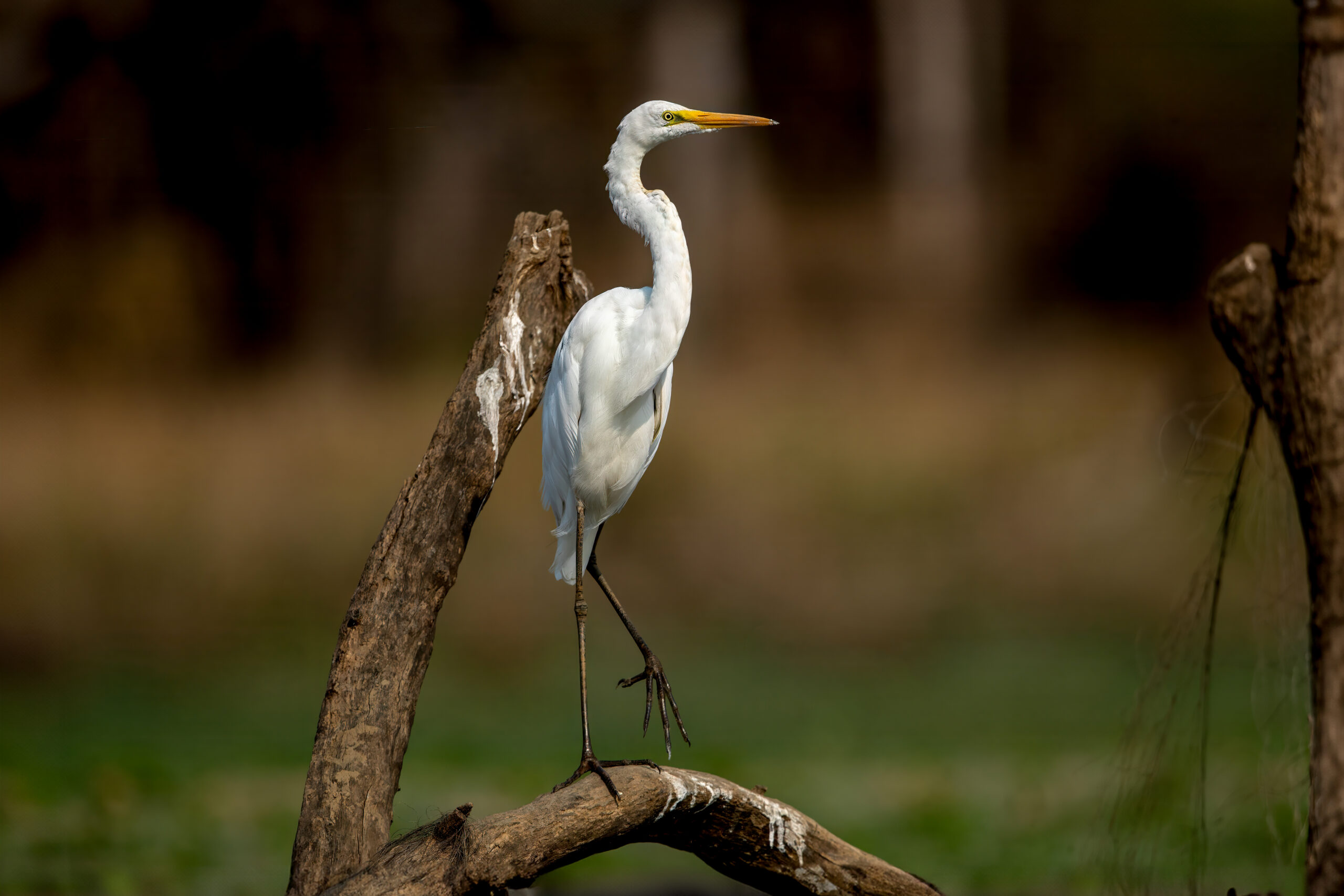
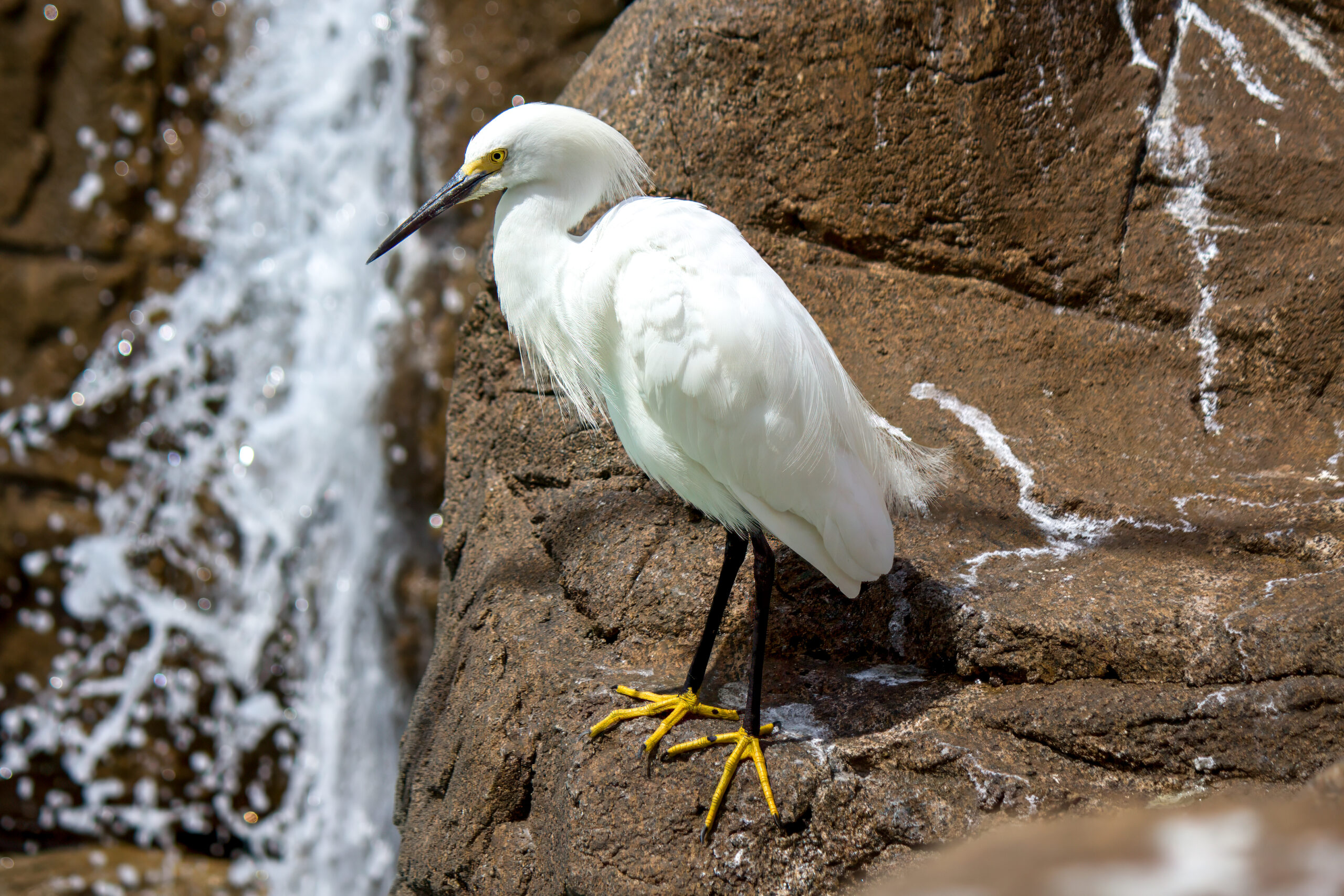
For great egret, the model estimated an increase from 238 nesting pairs in 2000 to 467 in 2022, a gain of 229 pairs. Snowy egret increased from 220 to 277 pairs, a gain of 57. The authors suggest that these increases may partly continue the long recovery of the two egret species following legal protection and improvements in water quality during the twentieth century.
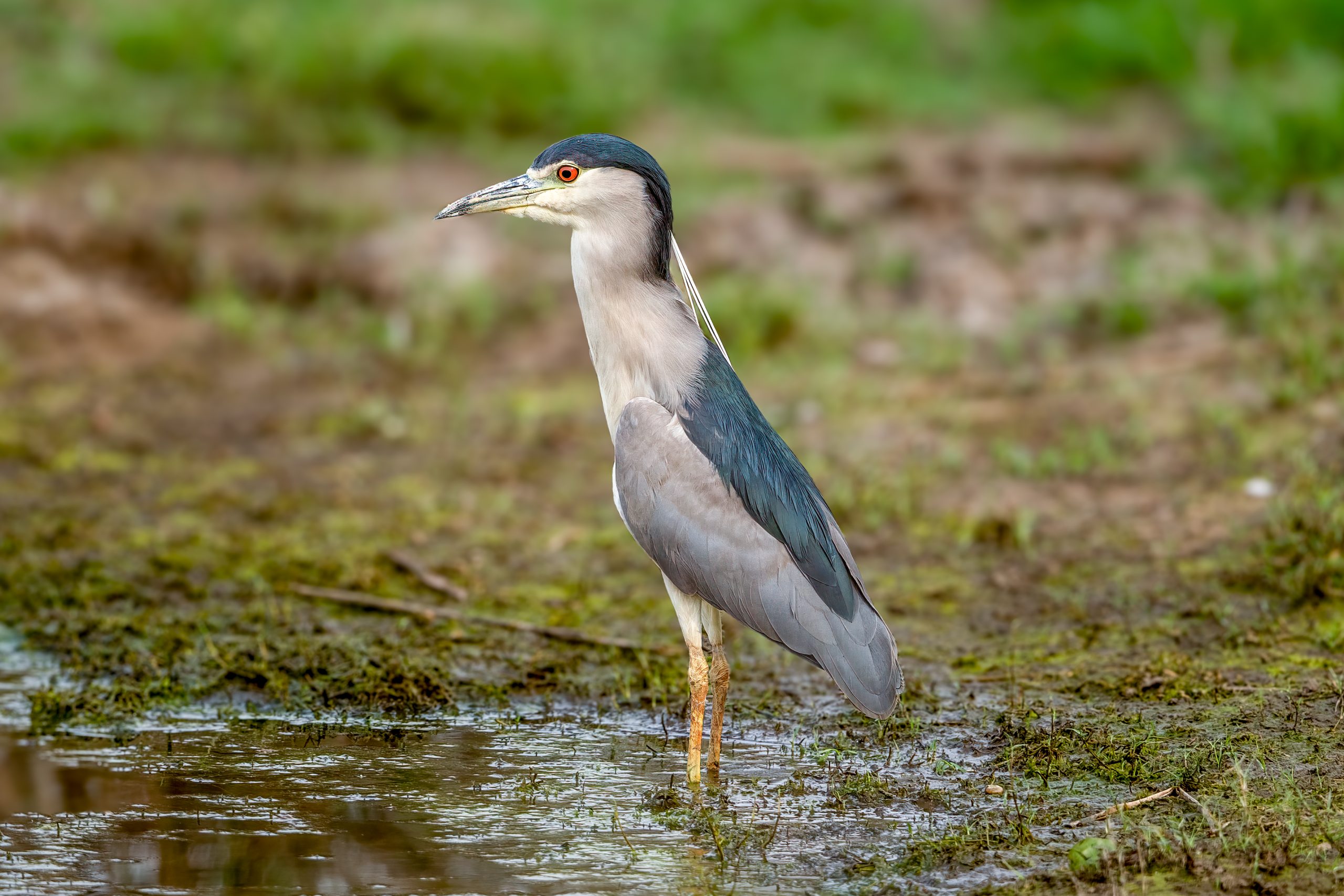
The pattern was very different for black-crowned night heron. Its modelled nesting population fell from 1,038 pairs in 2000 to 472 in 2022, a loss of 566 pairs. Glossy ibis declined from 266 to 109 pairs. Because black-crowned night heron has historically been the most numerous colonial wading bird in the harbor, its decline was a major driver of the 27% decrease in the overall nesting population of wading birds during the study period.
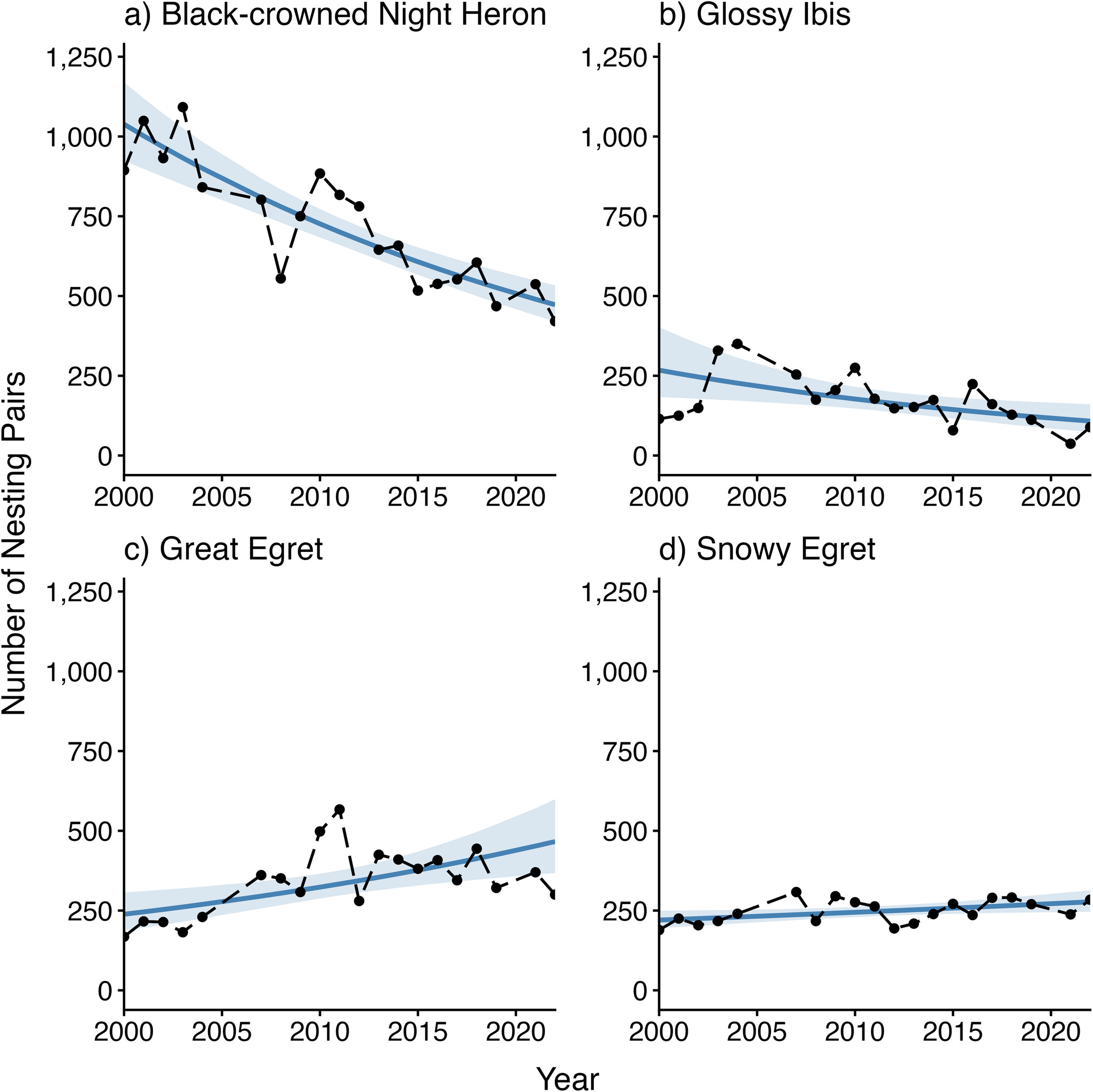
The number of active breeding colonies did not show a significant trend and remained around six colonies on average. The decline therefore reflected fewer nesting birds rather than a simple disappearance of nesting islands.
Projections if the declines continue
The researchers also projected what continued declines could mean for the two decreasing species. A linear extrapolation placed possible local loss of breeding black-crowned night heron as early as 2037 and glossy ibis in the mid-2030s. A separate population-viability model estimated when numbers might fall to 5% of each species’ maximum abundance during 2000–2022, with median dates of 2077 for black-crowned night heron and 2048 for glossy ibis. The authors emphasize that uncertainty around these projections was wide.
They discuss several possible pressures that require further investigation, including contaminants, competition for nesting space, changes in vegetation on colony islands and increasing predators. The authors conclude that the rapid decline of black-crowned night heron in what remains the largest breeding population in the northeastern United States requires immediate conservation attention.
Population & status
Related news
Drone Surveys Produced Similar Nest Survival Estimates to Ground Surveys for Florida Waterbirds
At four Lake Okeechobee colonies in Florida, drone imagery tracked 510 waterbird nests and produced nest survival estimates…
Read story →
Great Egret and Grey Heron Dominated Many Inland Heron Colonies in South Korea
Across 176 South Korean breeding colonies, two colony groups had more than 90% of nests from large-bodied herons…
Read story →
Anurans Were the Main Assimilated Food Source for Cattle Egret Chicks in Southern Brazil
Stable-isotope and food-remains analyses from a mixed heron colony in southern Brazil showed that western cattle egret chicks…
Read story →SPECIES IN THIS STORY
Species in this story
Independent research and conservation news archive
Did you find this information useful?
Wildlife Vagabond is independently built and maintained. Voluntary support helps cover source verification, hosting and continued work on research and conservation news.
Support Wildlife VagabondThe news archive will remain freely available.